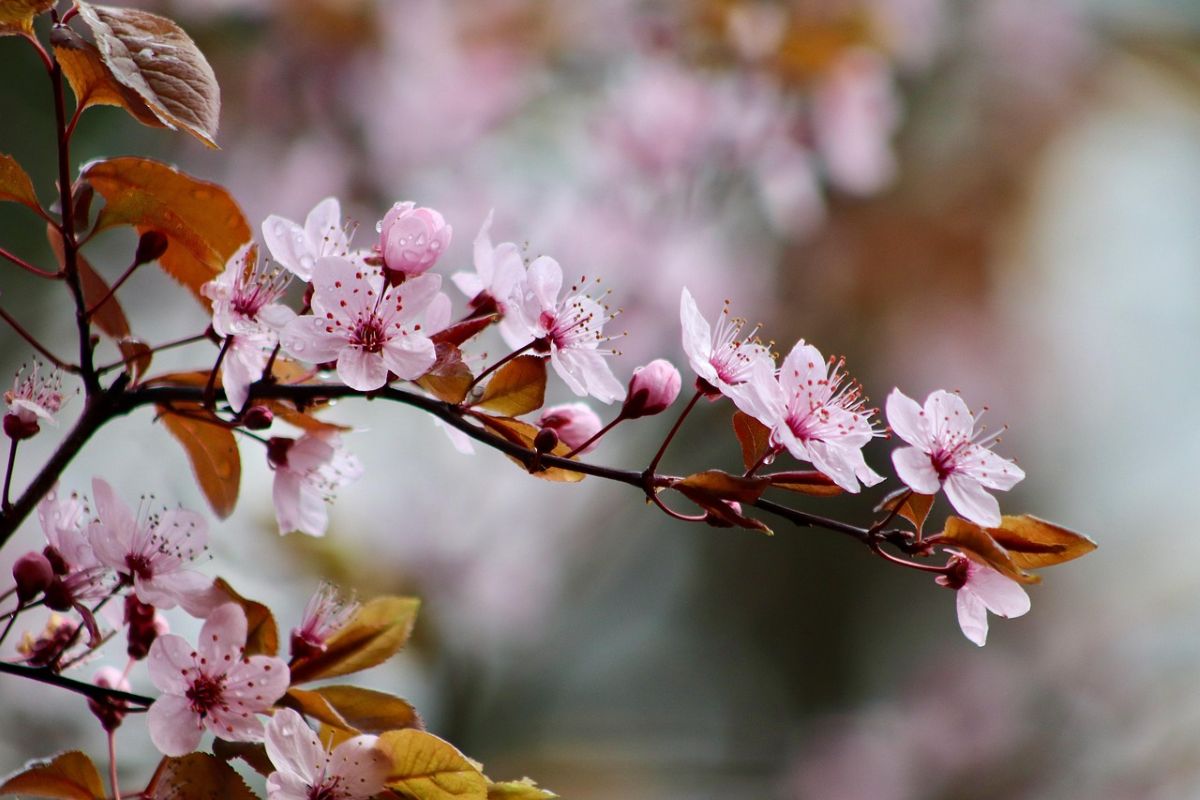
Yesterday I was out early in my garden—delighting in the pink blossoms of the plum trees, trimming my two small hydrangea bushes next to the garage, and chatting with a neighbour who stopped by. Then just before supper, I was out in the garden again, trimming last year’s faded blossoms from my other hydrangea bush at the side of the house.
“Have you been out here all day?” came a voice from behind me. It was the same neighbour who had stopped by that morning, and we both had to laugh. I was out in the garden again, and she was out for another walk, this time with her husband.
Oh, how I love spring! The cool air, the warmth of sun, the colours that seem so fresh, the cheer of birdsong, the chance to connect with neighbours. For all these reasons and more, spring is my favourite season of the year.
And yet, I love the change of seasons too. When spring rains give way to summer sun. When the heat waves of summer yield to the crisp air of fall. When winter blankets the earth with snow, and I can sip hot chocolate by the fireplace.
As Ecclesiastes 3:1 says, “For everything there is a season and a time for every matter under heaven.” Then the preacher poet goes on to list some of the different seasons of human life.
Real Life
In my office at home, I have a date stamp that I can adjust to show the month, day, and year, There’s another dial with various labels, like Today or At This Moment. On days when I have appointments away from home, I sometimes turn the dial so the stamp says On-the-Go. On weekends, I like to turn the dial to Little Joys. But most often, I leave the dial on Real Life.
That’s a fitting title for Ecclesiastes’ poem with its litany of seasons: birth and death; grief and rejoicing; love and hate; war and peace; work activities like farming and building; household activities like mending and sorting through things (Ecclesiastes 3:1–8). The fourteen pairs give us a glimpse of human life, all without judgement. Ecclesiastes doesn’t say it’s good to kill or to hate. It doesn’t say war is a good way of resolving differences. It simply acknowledges these realities of human life, the sad endings of loss and mourning as much as the glad beginnings of new birth.
Personally, I’d rather skip over some of the seasons that Ecclesiastes lists. I wish people didn’t have to grieve or endure war. But clearly, that’s not the kind of world we live in, and Ecclesiastes is clear that we cannot understand why: “we look back on the past and ponder over the future, yet we cannot understand the doings of God” (Ecclesiastes 3:11).
Instead, the message throughout the book seems to be that we are to live into each season with faith and hope in God—whatever this season holds for me, whatever this season holds for you. As Ecclesiastes 12:13 says:

The end of the matter; all has been heard.
Fear God, and keep his commandments,
for that is the whole duty of everyone.
That’s real life.
Respond: In every season of life, in every beginning and every end, God, be with me and guide me.
An earlier version of this devotional first appeared in Rejoice! daily devotional, Winter, 2021–22, copyright © MennoMedia.
Writing/Reflection Prompt: What does this season of life hold for you?


 April Yamasaki
Please leave a comment: