last updated October 1, 2019
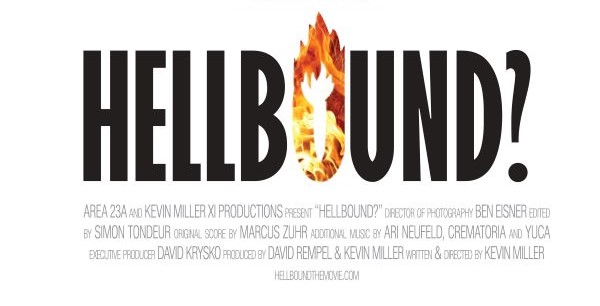
The thing I like best about the documentary Hellbound? is that it’s not just about hell. Instead, it’s a broad look at the subject that includes:
- how we understand God
- how we read the Bible
- the church
- theology
- power
- politics
- asking questions
- how we relate with people who don’t agree with us
- how we live out what we believe or don’t believe in our daily lives.
These things give depth and background to the film, yet writer/director Kevin Miller never loses sight of his central focus to explore different views about hell. He begins and ends his film with remembering the suffering and terror of 9/11, and in that context combines narrative, interviews, images, and music to explore three different views:
1. the classic view of hell as a place of eternal punishment that takes seriously God’s justice
2. the annihilation view that takes seriously God’s justice and compassion—suffering will not be eternal, but eventually those who are not saved will be annihilated
3. the universalist view that eventually all will be saved—the grace of God and the all-powerful work of Christ by the Holy Spirit will one day reconcile all things
The film is even-handed in showing that each of these views can claim some support in the Bible, each has its advocates, and each also gives rise to some difficult questions. e.g., If hell is an eternal place of punishment, then isn’t God taking revenge as any human being might, and if that’s the case, then is God actually good? Is God actually God? If eternal punishment is replaced by annihilation, or if there is no hell and everyone goes to heaven—are these views simply wishful thinking, and are we simply trying to avoid hard truths? What then is the meaning of the cross? Does the universalist view mean that people don’t really have a choice?
While the film offers some critique all around, it does seem to favour a more open view that allows for questions, that puts less emphasis on having the right answers about hell, and more emphasis on how we live. That at least is what I came away with, or is that just my bias showing?
Personally I don’t spend a lot of time thinking about hell. I’m aware of these various views just as there are different views on the atonement or women in ministry, or any other aspect of theology. I realize that whatever we may think we know about hell or anything else is limited. But it was good to think about all of this in the context of the film—where else would I hear from rockers and the people of Westboro Baptist Church alongside church leaders like Mark Driscoll of Mars Hill Church, Rob Bell of Love Wins fame, emerging church author and speaker Brian McLaren, and alongside people from my own hometown of Abbotsford (good job, Brad Jersak and Ron Dart!).
I believe in God’s love and in God’s justice. I believe that Jesus demonstrated the sacrificial love of God and that he talked of coming judgement. And instead of erring on one side or the other, I think we need to “live in the mystery” of all of that as Ron Dart says at one point in the film.
Hellbound? is a thought-provoking documentary and a good discussion starter. I wonder though, who is the audience for this film? There were only 10 people in the theatre when I was there. And since there were very few women and people of colour in the film, does the debate about hell mainly concern those who are white and male? Where were the biblical scholars? There were many church leaders among the interviewees, and I saw John Stackhouse Jr. and Mark Noll in the credits, but there seemed to be fewer biblical scholars compared to the theologians and others on screen. Would even more attention to the biblical texts have added more depth, or somehow made the film less accessible to a general audience?
I wonder too, How does a Christian documentary open at a theatre like the Langley Colossus which is also showing The Bourne Legacy and Sinister? Has anyone walked out of the theatre when they realized that Hellbound? was a documentary instead of a thriller?
If you’ve seen Hellbound?, can you let me know, I thought I saw a shot of the interior of First Baptist Church in downtown Vancouver—is that right? And when you see the pastor who was dismissed from his church for questioning the existence of hell, is he holding a copy of Common Prayer: A Liturgy for Ordinary Radicals? It looks like my copy of the book!
For free email updates and a copy of How to Pray When Prayer Seems Impossible, sign up here.


 April Yamasaki
Please leave a comment: