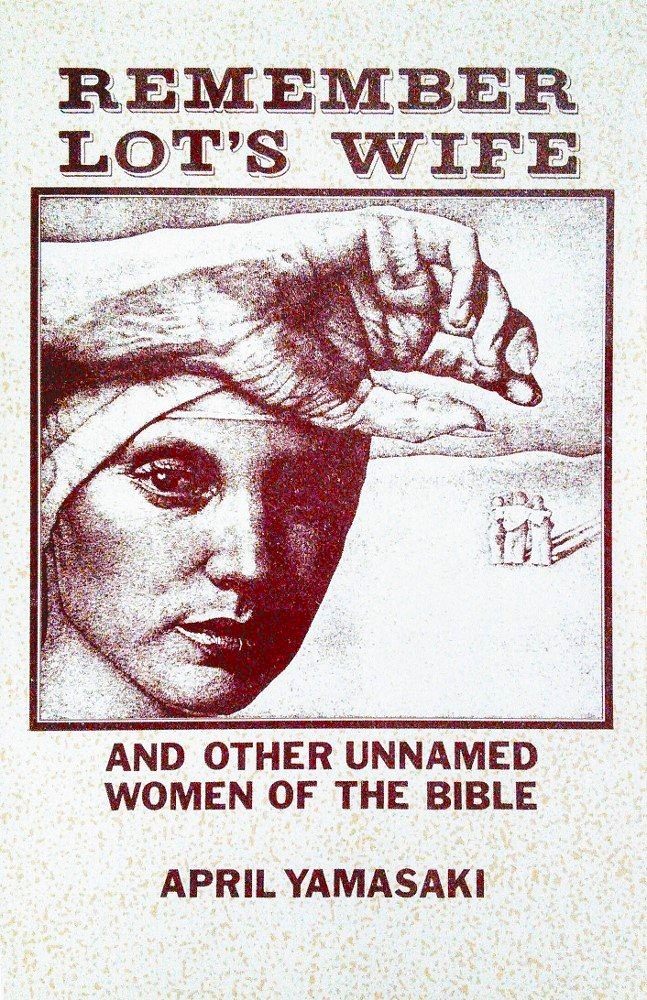
This post introduces a series of reflections from Remember Lot’s Wife and Other Unnamed Women of the Bible (published by faithQuest, an imprint of Brethren Press).
Although the book is now out of print, the women’s stories endure and speak to us today. I invite you to meet them in this series and to connect their stories with your own.
From the opening chapter of Genesis to the closing words of Revelation, the Bible bears witness to the importance of names. In creation, God names Day and Night, Sky and Seas and Earth. In the last chapter of Revelation, Jesus gives his own names as the Alpha and Omega, the first and the last, the beginning and the end, the root and descendant of David, the bright morning star.
The book of Numbers lists all the people of Israel by family name. Paul’s letter to the Romans ends with greetings to various Christians by name. Throughout the Bible, people often receive names that express their personality or the events surrounding their birth. The names of places are carefully explained.
Given this wealth of names recorded in the Bible, it’s all the more striking to discover how many names are missing from its pages, particularly the names of women. In the biblical genealogies, for example, women were regularly omitted as part of the patriarchal tradition. In other places, women are mentioned but unnamed. Like Lot’s wife, some of these unnamed women of the Bible played a relatively small part in the biblical story. Like the poor widow at the temple treasury, some women were never identified to the biblical writers.
Like many of these unnamed women of the Bible, many of us today will remain unnamed in the history books written about our own age. Many of us may feel unnamed in the life situations we face. We are the youngest daughter, or so-and-so’s wife, or so-and-so’s mother, or the office secretary, or the grade-five teacher, or the family doctor, or the woman in red who wants a refund at the department store counter.
Sometimes we might find it easier to remain anonymous. We may not feel the need to identify ourselves completely to everyone we meet. But sometimes it can be wearing, even demeaning, to be identified always by our relationship to someone or something else. Sometimes being unnamed can make us feel unloved, unwanted, unworthy. We feel ourselves shrinking in significance to God and to other people.
Yet nothing could be further from the truth. As God called our biblical foremothers to a life of faith, so God also calls us. As God loved them and knew their names, so God loves and names us. We too make a difference in the world around us. We too have our own stories to tell.


 April Yamasaki
Please leave a comment: