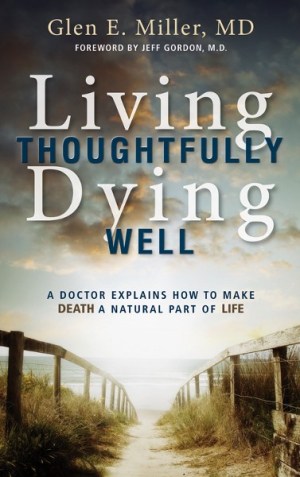
I hadn’t planned on reading Living Thoughtfully Dying Well by Glen E. Miller, MD (Herald Press, 2014), and I almost stopped when I read this sentence in his introduction (page 20):
Everyone deserves a good death surrounded by loved ones in an atmosphere of peace and serenity.
“Deserves”? I wondered, as I thought of loved ones dying from a sudden heart attack or in fatal car accidents, of the many people who have died in war or by other violent means. I had been very close with my mother and my in-laws in their final years, and well remember many in their care homes who did not have family close by or perhaps at all, or who were estranged from them. If everyone “deserves” a good death, there are many who are missing out, and I wondered at the sense of entitlement in the word.
Still I kept reading — one of our church Connection Groups had chosen to study the book together and had asked me to lead Chapter 4, so I planned to read at least that far. Once I got past the introduction, I appreciated the author’s own story, and by page 32, I found myself agreeing with his definition of:
a good death which reflects the values and theology that have guided your life.
That resonated with me much more than the book’s earlier assumption that everyone “deserves” a peaceful death surrounded by loved ones, and this later definition seemed to allow more room for individual variations. For one man I know, being free of pain was an important value, while another chose less pain medication in favour of greater clarity of mind. Some die surrounded by family, while others seem to wait until the one moment when family have just stepped out of the room.
This book generated excellent discussion as my group engaged with the content and also shared their own stories and personal perspectives. “What would we like to add to chapter 4?” I asked them, and they suggested:
- more consideration of feelings–not focusing only on the rational but acknowledging the emotional;
- the power of prayer to heal;
- the power of community. I was especially struck by this, since the book seems to assume throughout that everyone has beloved and supportive family members to help discuss and make decisions. What about singles, widowed, those without children or other close relatives, I wondered. What role might there be for community?
In the days following our group meeting, I read the rest of the book, and grew to appreciate it even more for the practical helps it includes:
- Discussion questions for each chapter;
- Exercises on clarifying one’s own beliefs and preferences for care;
- A checklist of tasks like writing a will and funeral planning;
- Role-play scenarios that help bring the issues to life.
For more information, please see MennoMedia.


 April Yamasaki
Leave a Reply to shirleyhs Cancel reply