 Last week’s local news included the devastating report that two high school students had been stabbed while at school. A thirteen-year-old girl was killed, another fourteen-year-old girl in hospital, and a twenty-one-year old man charged with second-degree murder and aggravated assault in the apparently random stabbing.
I hardly knew how to respond to such a personal tragedy for those most closely affected, and to the public tragedy as it touched so many in our community and unfolded in the local and provincial news. Finally I decided to share one of the news articles on Facebook along with this prayer:
Praying God’s comfort for grieving families and friends, for students and staff and all those dealing with trauma; praying healing for the victim in hospital along with her family, for the family who lost their daughter far too soon and in such a way, for the school, church, and our city as we bear this sorrow, for the pressing needs of homelessness, for the violence, mental health and other factors that may be involved. God, have mercy and hear our prayers.
I wasn’t prepared for the many reactions and shares, for the people responding from outside our local community, for people I didn’t even know joining in. In the midst of the painful news, it seemed as if we needed some words of prayer, to come together with a common cry to God.
Given the response, I thought it might be helpful to reflect further on praying for such personal and public tragedy. In previous posts like How to Pray for the Syrian Refugee Crisis When You Can’t Find the Words and How to Pray for Peace When You Can’t Find the Words, I’ve found and shared the prayers of others to help me pray. But last week I found myself groping for words of my own.
I needed to begin with silence. Instead of adding to the noise and confusion, instead of speaking out of ignorance, I first needed to hold the situation and all concerned in silence before God.
My personal prayers may or may not make sense to anyone else but God, and that’s okay since they’re not meant to be shared with anyone else. But for prayers shared with others, I try to choose words carefully so they make sense to other people. In this I take my cue from 1 Corinthians 14, where the apostle Paul says that he would rather speak five words that make sense than ten thousand words that others are not able to understand. Otherwise, he says, how can anyone else say Amen? If no one understands, then no one else is built up.
At the same time, I tried to pray for all concerned. I think of this as a 360-degree prayer–a prayer that goes all around the circle, that’s not just for one segment of those involved, but includes those who are harmed and those who harm, those who grieve on all sides as family members and friends of both victims and perpetrator, for all those dealing with the trauma, including in this case both fellow students and staff members.
For our Sunday morning prayers as a congregation, I don’t name names without permission, and in any other public prayers it is also important to respect personal privacy. Although this was a public tragedy in the news, it was also deeply personal for the two victims and their families. I didn’t need to include their names to pray for them.
According to news reports, the man arrested gave “no fixed address.” If he is indeed the person responsible, I don’t know how much homelessness or mental illness might have contributed to his state that day, or what other factors might have played a part, but I wanted to be mindful of the bigger context as I prayed.
“Don’t let him get off by saying he had a mental health issue,” someone replied, and why is he being charged only with second degree murder? I didn’t know how to respond to this since there was and is so much I don’t know–the legal difference between first and second degree murder, what evidence has been uncovered, whether the man is even mentally able to stand trial. Without knowing more, I could only pray without rushing to judgement.
On Twitter, I sometimes use the hashtag #prayingthenews. On the one hand, I believe that prayer could well be the most faithful and effective response to the news around us, yet I also believe that faithful and effective prayer leads to action, requires action. Just as James 2:14-17 says that faith without works is dead, might we also say that prayer without action is dead? In this case, to pray and act includes supporting those who are grieving, taking steps to make schools safe, loving your kids, addressing homelessness, violence, mental health, and other issues.
It also means that we pray in non-crisis situations as well. We don’t need to reserve prayer for personal or public tragedy. Instead, we can make prayer our on-going conversation with God–in words and silence, in personal prayer and sharing together, when we feel in turmoil or calm or may not even know how we feel. As Ephesians 6:18 encourages us, “Pray in the Spirit at all times in every prayer and supplication.”
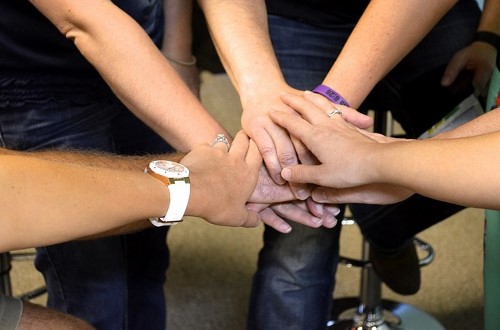
Reflection/Writing Prompt: What’s happening in the news around you? Write your own 360-degree prayer for all concerned.
For more faith-focused and writing-related articles,
please sign up for my weekly updates.
I’d love to keep in touch with you!


 April Yamasaki
Leave a Reply to Elfrieda Neufeld Schroeder Cancel reply