 As we enter this Holy Week before Easter, it’s been four weeks since our congregation has been able to meet in person for worship, and there’s no telling how long this coronavirus pandemic will last, or how many more weeks we may need to worship apart at home.
While we wait, I’m grateful that here in British Columbia, the COVID-19 updates indicate that physical distancing and other measures have slowed the rate of spread of new cases by as much as half. As Canadians continue to return home from other parts of the world, they will need to be isolated for 14 days, while the rest of us continue to persevere in our efforts to stay home and stay safe, for own well-being and in the best interest of everyone in our community.
Yet even as we maintain our physical distance, it’s possible to remain socially engaged with one another—through phone calls, texts, emails, social media, video-conferencing, waving through the window, making music together from one balcony to another, cheering in appreciation for health workers, and other ways.
In the interest of furthering connections, allow me to introduce you to Marian Longenecker Beaman, who is a former professor at Florida State College in Jacksonville, Florida, and the author of Mennonite Daughter: The Story of a Plain Girl (September 2019). Marian and I first got acquainted online where she blogs at Plain and Fancy, she wrote a generous review of Four Gifts when my book was published two years ago, and I was delighted when she invited me to read her debut memoir.
I was immediately drawn into Marian’s story by the prologue that tells how she as a young school teacher was called before the bishops, and of course I just had to skip forward to read the rest of that story near the end of the book. Only then was I ready to go back and start at the beginning.
For those of us plain or fancy, Mennonite or not, there’s lots to love in Marian’s story of faith, family, and forgiveness. I have great respect for the way she looks back on her life with compassion and forgiveness for those who have wronged her, how she grows to accept her past, and move into a new future. Her book also includes original drawings by her husband, family photos, a glossary of her parents’ made-up sayings (like “hickamoriah”–isn’t that a great word for whatever you don’t have a name for?), a few recipes, and questions for discussion.
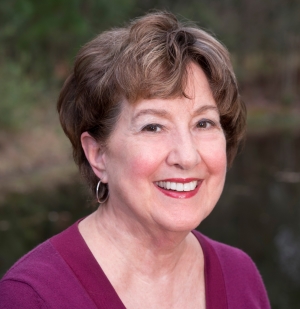
Marian, what prompted you to write your memoir?
After a fulfilling career teaching college English, I longed for the connections with colleagues and students in my composition and literature classes. Seeking something meaningful in my Third Act, I took a course titled “What the heck is a blog?” offered in a lifelong learning class at the University of North Florida. Providentially, the presenter showed the example of a successful blog featuring Mennonite author Shirley Hershey Showalter. Though I didn’t know Shirley at the time, I intuited from the name she had Mennonite background.
Thus I began blogging seven years ago and found connections to other author/memoirists who encouraged me to write my own memoir.
Your book is subtitled “The Story of a Plain Girl,” and your blog is “Plain and Fancy.” What do you mean by “plain” and “fancy.”
In the 1950s, I wore the prescribed white, mesh prayer covering and a caped dress, identifying me as a Mennonite of the Lancaster (PA) Mennonite Conference. “Fancy” meant being free to wear jewelry, wear my hair in a fashionable style, and use makeup. Over the years, I have learned that being plain for me doesn’t equate to spiritual depth although dressing this way is a preference for some. I discovered it’s okay to reveal my authentic self, externally, one that matches my idea of looking pretty.

In what ways do you still think of yourself as Mennonite, and in what ways(s) does being Mennonite simply part of your past?
This excerpt from the epilogue of Mennonite Daughter expresses my convictions today:
Even after the strict dress code fell away, the strong pillars of faith and family have defined my core values. I still believe that God is the creator of the universe and the sustainer of life. I also have trusted Jesus Christ as my Savior from sin and the Holy Bible as my guide through life. I can trace these beliefs from teachings in early childhood. But I still espouse them as an adult because I have observed God’s faithfulness in my life, his mercy when I fail, his strength in my weakness, and his provision of life eternal. But now I live a full life without the need to fidget and chafe under the yoke of restrictions that bound me in my youth.
Thus, the Mennonite culture has left an indelible imprint upon my life. In my heart, I will always be a Mennonite.
In the exchanges we’ve had about your book, you commented, “My hope is that readers will feel my victory over abuse in my life and perhaps experience in their own.” What abuse did you experience, and what does your victory look like today?
My father physically abused me, going overboard with punishment and being heavy-handed with discipline, which my memoir details. Over the years, and especially writing memoir, I have gained victory over bitterness by concentrating on his gifts to me: intellectual curiosity, love of music, and appreciation for nature.
At least two of my reviewers have told me they have experienced healing through reading my story. Both of them were men, one a Mennonite. Here are excerpts:
I read this book with much interest in a couple of days. It’s a page-turner. Growing up, myself, in a plain Mennonite farm family, as a young boy I experienced many of the same emotions of wanting to find expression of beauty in the world around me. . . . It was a healing experience to read this book and has opened some new doors in my heart and mind in self-understanding. (Bob)
Like the author, I also suffered abuse at the hands of my father. Her stories triggered the emotions of my own experiences. As I have gotten older and wiser, I have come to understand and forgive my father also. I realize how hard it must have been for my Depression-era father to make a living and raise children. (Larry)
What part did/does forgiveness play in healing the wounds you’ve experienced in your relationship with your family and with the church? Is it possible to “forgive and forget,” or does forgiveness mean something else?
My heavenly Father has freely forgiven me, so I find it easier to forgive others for offenses, sometimes slight. As I’ve grown older too, I see events that happened over fifty years ago in a less judgmental way. Through the telescope of time, my feelings have mellowed, a good thing. I don’t necessarily “forget” my hard experiences, but they have become a part of my history, woven into my spiritual pilgrimage as a Christian.
What part does your faith play in the way you understand and practice forgiveness?
I truly believe the Bible as my standard and guide through life. These verses in particular sum up this belief:
As far as the east is from the west,
so far he removes our transgressions from us. – Psalm 103:12in whom we have redemption, the forgiveness of sins. . . . – Colossians 1:14
but if you do not forgive others, neither will your Father forgive your trespasses. – Matthew 6:15
In what ways has writing this book been therapeutic for you? Do you have another memoir in the works on the “fancy” part of your life?
Writing memoir is a process, one that for me was like doing therapy on myself. Sometimes my husband would come in the door and find me sobbing at my computer keyboard. Why? I was experiencing the past, its setting and the emotions that have accompanied it. Author Mary Karr has declared that one must zip oneself into the skin of his/her former self to write memoir. I tried to do that in a sensory way.
About your second question: I’m busy promoting this book, but my artist husband Cliff and I have considered writing a children’s story book, perhaps titled Kids and Oaks, about Grandma Longenecker’s great grandchildren planting an oak tree in her honor. Of course, my husband would illustrate it.
For whom did you write your memoir?
Mennonite Daughter: The Story of a Plain Girl is dedicated to our children, Crista and Joel, and to the generations that follow.
But take care and watch yourselves closely, so as neither to forget the things that your eyes have seen nor to let them slip from your mind all the days of your life; make them known to your children and your children’s children . – Deuteronomy 4:9
A framed motto sitting close to my desk has inspired me to persevere through the toil of excavating memories and polishing my manuscript: “Soli Deo Gloria!” Glory to God Alone!
Disclosure: I received a complimentary copy of Mennonite Daughter: The Story of a Plain Girl by Marian Longenecker Beaman (September 2019), and thoroughly enjoyed this memoir. As always, the choice to feature a book and any opinions expressed are my own and freely given.
Writing/Reflection Prompt: Have you ever considered writing your memoir? Why or why not?
_____________________
For more on everyday acts of faith,
sign up here for free email updates and receive
a copy of How to Pray When Prayer Seems Impossible


 April Yamasaki
Leave a Reply to Liesbet @ Roaming About Cancel reply