 As an editor of a daily devotional magazine that’s published four times a year, I’m learning to live in one season while working in another. So given the lead time for each issue of Rejoice!, this week I’m living in fall, while editing our ’25 spring issue. This winter, I’ll be editing our ’25 summer issue.
There’s a lead time for books too, so in May of this year, I was reading a new book for the Advent and Christmas season: Comfort and Joy: Readings and Practices for Advent by Sherah-Leigh Gerber and Gwen Lantz (Herald Press, 2024). The authors are both Rejoice! writers, but that’s not why I’m endorsing their book. And while I’m currently working on a book manuscript for the same publisher, that’s not why either.
Here’s what I loved about their new book that has just been released:
Comfort and Joy is much more than “readings and practices for Advent.” It’s a celebration of family and friendship, stories of days past and present, with reflections on Scripture, recipes, poetry, and prayers of blessing that start with Advent and take us through Christmas all the way to Epiphany. Reading this book was a gift to me, and I’m happy to recommend it as a gift of grace for the Advent and Christmas season.
Today I’m happy to share an excerpt from the book and—yes!—host another giveaway. The draw to win your very own copy of Comfort and Joy closes at the end of October. To enter, please leave a comment at the end of this post.
The following excerpt is from week 2 of the Advent season written by both Gwen and Sherah-Leigh. Used by permission of Herald Press. All rights reserved. Thank you, Sherah-Leigh and Gwen, for your beautiful book!
Reverence for the Future
Gwen
I grew up in a small, rural valley nestled within the larger Blue Ridge Mountains of Virginia. Each year we cut our Christmas tree from a neighboring field of cedars. Virginia cedars grew like weeds in the pastures and could be rather scraggly looking, but they definitely brought the scent of the season inside. The aroma of fresh, pungent pine filled the house every year. Once we added lights, tinsel, and various ornaments, who minded the less-than-perfect shape? Certainly not my childhood self. When the tree was in place in the family room, there was the hope of gifts to come. And after the gifts were in place, there was the hope of a wonderful surprise when they were opened on Christmas morning.
I remember feeling a bit of scorn—and also shock—upon learning that other families didn’t wait until Christmas morning to open presents, opening gifts on Christmas Eve instead. (Picture here a small, wide-eyed child with her hand over her gasping mouth.) Delayed gratification and hopeful waiting were practically a competitive sport in my family. As we waited for gift-opening to commence, we played the game of calculating what was in the packages by shaking and lifting each gift. My brother got so good at guessing that my mom resorted to diversionary tactics, such as adding puzzle pieces and bricks to gift boxes, to throw us all off. She eventually devised a strategy to leave off the name tags altogether. Of course, this plan was risky, as then she needed to remember whose gift was whose on Christmas morning. All this heightened intrigue only increased our delight; brightly wrapped presents lovingly placed beneath the tree were symbols of anticipation and hope.
Hope belongs in the Advent season. The word advent means the arrival of some person, thing, or event. And the season of Advent also implies waiting for that special something or someone to arrive. Hope is an essential part of celebrating and understanding Advent. As a child I entered into the hopefulness of the season surrounded by twinkly lights, homemade cookies, and shiny presents under a cedar Christmas tree. Anything might be in those packages. As an adult my hopes still include happy celebrations and presents, but they also extend into the future. I hope for God’s presence in my life and in the lives of others, especially the ones I love.
In the meantime, then and now, there was and is a lot of waiting.
It’s my own spiritual discipline to recognize God at work, not just as I reflect over the past events of my life, but in the present moment. Often when we look back, we can see all the things that God has done in our own lives or in the lives of others. For me this inspires a feeling of deep reverence. It moves me to realize how God has indeed been with me or with a friend, even when I couldn’t recognize it in the moment. For some reason God’s presence seems to be more easily identified as we glance back into the past.
Perhaps hope is the inverse of that. Hope allows us to hold this same feeling of reverence we experience when looking back over our life, but instead recognizing it as we look ahead toward events in the future that haven’t yet been realized. Hope is believing that God will work in the future like God has in the past. As the author of Hebrews 11:1 writes, “Now faith is the assurance of things hoped for, the conviction of things not seen.” I want to have hope that what is happening now will work out for good. This is intrinsically connected to that first type of reverence: because I can see what God has done in the past, I can have confidence for the future.
Biblical stories are full of hopefulness, retelling God’s faithful advent into each person’s present moment. These stories show that God desires to transform what appears to be hopeless. Hagar ran out into the desert hopeless and alone but met God there. When she left, she could confidently call God “the God who sees me” (Genesis 16:13 NIV). Joseph was sold into slavery by his brothers only to become a powerful advisor to Pharoah. Ruth, a stranger in the land of Israel, became a grandmother in the lineage of Christ. Mary, a young pregnant teenager, became the mother of Jesus. God’s provision and hope transformed each person in what were hopeless situations by any human measure.
We look back and draw strength from the historical recounting in the Bible, similar stories in our own lives, and the testimony of other believers. These stories all point to God’s faithfulness and become the fuel for the hope we hold out for God’s future work in our world.
In the meantime, we wait with expectation in the present moment. What people or dreams do you hold with hope this Advent season? We are fully alert, waiting for God to show up. So clean your metaphorical glasses, remove the spiritual wax from your ears, allow the cedar-pine scent to clear your mind. Look, listen, and wait—hopefully!
Christ was here on earth. We remember and we retell the story.
God is here now. We look for the signs of God’s transformative work in our lives.
Jesus is coming again. We hold hope courageously for the future.
Blessing for the Season
Sherah-Leigh
May you honor
the unexpected gifts of delight,
even as you go with great haste.
May you savor
the joy and goodness of the now,
trusting as Mary: Blessed!
May all that you bring from seasons past
enliven this one,
exclaiming as Elizabeth: Blessed!
And may all that you choose to carry on
sustain you,
even as you wonder: How can this be?
No matter what unfolds,
may you hold onto hope
for the fulfillment of what the Lord has spoken.
Amen.
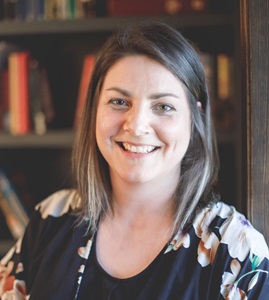
Sherah-Leigh Gerber and Gwen Lantz are good friends and writing partners.
Sherah-Leigh is a spiritual director and caregiver coach in northeastern Ohio. She is an ordained minister in Mennonite Church USA, and holds a master of divinity degree. Sherah-Leigh has served as a pastor in addition to working in other nonprofit leadership roles. She lives with her husband and two middle school-aged children on a fifth-generation farm. Learn more about her work at SherGerber.com.
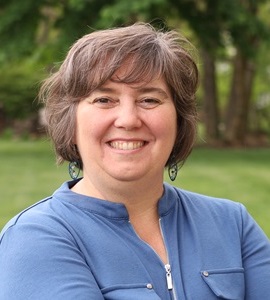
Gwen Lantz holds several jobs, including bookkeeper, elementary school librarian, and writer. She has a master’s degree in education with a specialty in school library science. Gwen lives with her husband and two children in the Shenandoah Valley of Virginia, and is a lifelong member of the Mennonite church. Learn more about her at SomeComfortAndJoy.com.
Writing/Reflection Prompt: Reflect on whether you feel more drawn to comfort or joy at this time of year.


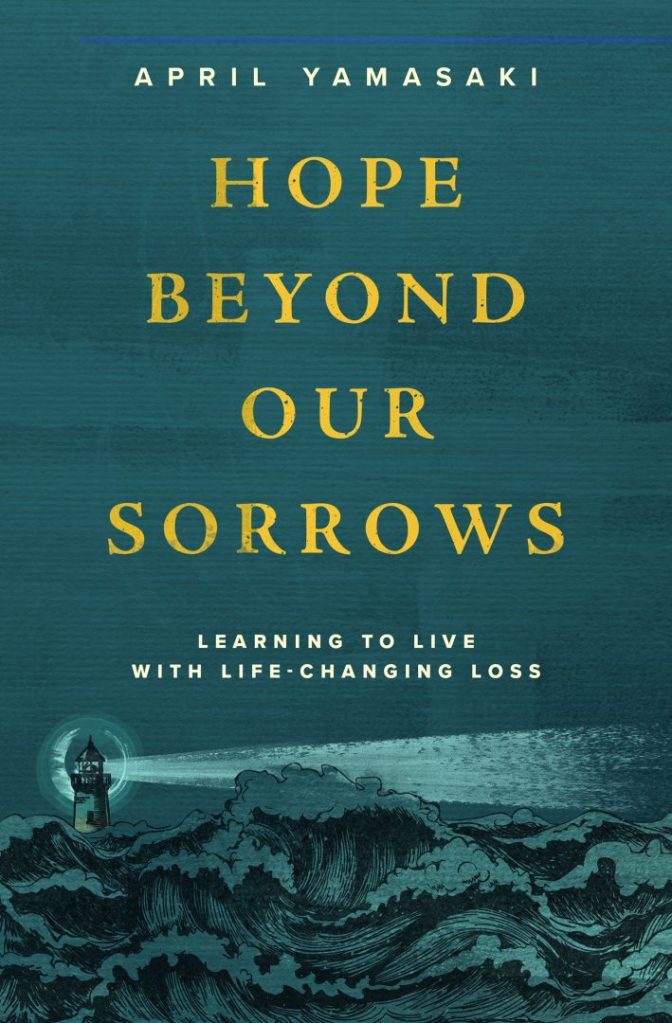
 April Yamasaki
Leave a Reply to Gwen Lantz Cancel reply