“You’re not moving, are you?” asked one of my neighbours with a concerned look on her face.
“No, I’m just trying to get more organized at home,” I reassured her.
I could see why she thought I might be getting ready to move. Several of our neighbours had left recently, and I had been stacking a number of boxes beside the garage for the next thrift store pickup. That’s when she saw me outside and stopped by to chat.
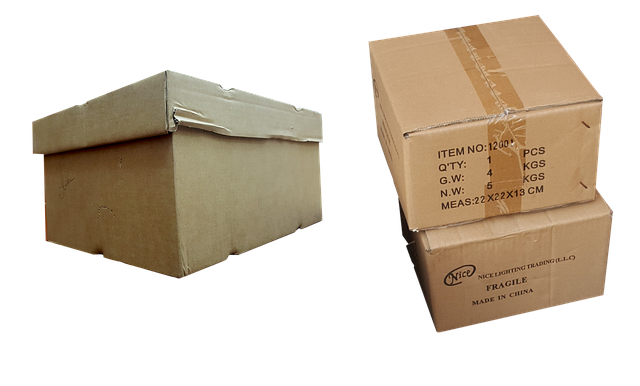
I’m still not planning to move any time soon, but every so often, I have a few more boxes for the thrift store, and every week I have more papers to recycle. A lifetime ago, my husband went to law school, passed the bar, and became a lawyer, then decided to go in a different direction. But he had kept all of his law school notes—hand-written, back when taking notes by hand was still a thing, now faded, but still neatly housed in file boxes. After the third anniversary of his passing, I decided it was time to let those old notes go.
In my attempts to get my household in order, I’m reminded of these words from Ecclesiastes:
There is a time for everything,
and a season for every activity under the heavens. . . .
a time to keep and a time to throw away.
—Ecclesiastes 3:1, 6
Or in my case, there is a time to keep and re-use or re-purpose, and a time to give away, recycle, or donate to a thrift store.

I wonder though, beyond Ecclesiastes’ general observation, are there some biblical principles for what we might call spring cleaning? I tend to clean up and clear things out year ‘round, but getting ready for the lunar new year (generally celebrated in late January or February) is often associated with spring cleaning. And Lent—which started a few weeks ago—can be considered a kind of spring cleaning for the soul.
But whether we think of spring cleaning now or year ‘round, how do we decide what to keep and what to cast off? I’ve seen some articles online about a Christian perspective on decluttering, and there are even decluttering courses offered for women.
But is decluttering only for women? Don’t we all accumulate things, and in time need to let some things go? And are there some specifically Christian principles for spring cleaning in the sense of decluttering, or is that over-spiritualizing a physical, practical reality of life?
We are spirit and soul and body.
In Scripture, human beings are described as both body and soul, made from dust and filled by God with the breath of life (Genesis 2:7). We are “soul and body” (Psalm 31:9), “spirit and soul and body” (1 Thessalonians 5:23), “heart . . . soul . . . mind . . . and strength” (Mark 12:30). The disposition of our souls affects our bodies—inward anxieties can make our hearts race. And what we do with our bodies outwardly affects us inwardly—at least for me, when I eat too much of the wrong foods, I often feel disturbed in spirit too.
So I don’t think it’s over-spiritualizing to look for biblical guidance in spring cleaning and decluttering. It’s simply a recognition that our lives are both physical and spiritual, that God cares for our whole lives as whole people. That’s a good, first, basic principle for everything we say and do. All of life—including any spring cleaning—is part of our life with God.
Life is not only about things, and things are not only about physical realities.
A second basic principle is that life is not only about things. As Jesus taught in his sermon on the mount, life is more than food, and the body is more than clothing (Matthew 6:25ff.). At the same time, we also need to realize that things are not mainly about the things themselves. Food is not only to nourish our bodies. Food is also celebration, comfort, and art. Food builds families, communities, and cultures.
In a similar way, things hold memories, can evoke strong emotions, and help to remind us who we are. Professional organizer Marie Kondo was not wrong in asking her clients, does this particular item spark joy? As we declutter, we would also do well to think about the larger significance of the things in our lives. Have they outlived their purpose? Is it time to pass them on to make room for something new? Can they be used to bless someone else?
Spring cleaning can be inward and outward at any time of year.
A third basic principle is to think not only of spring cleaning our outward physical space, but to consider also spring cleaning for our souls. If you’ve given up multi-tasking, social media, or something else in this season of Lent, you know what I mean. By giving up multi-tasking, you declutter both your outward busyness and your inward sense of stress. By giving up social media, you give up distraction inwardly and make space for people outwardly in real time.
But just as spring cleaning is not only for spring time, decluttering our souls is not only for the few weeks of Lent. It’s for any time of year. As Ephesians encourages us:
Put away from you all bitterness and wrath and anger
and wrangling and slander, together with all malice.
Be kind to one another, tenderhearted,
forgiving one another,
as God in Christ has forgiven you.
—Ephesians 4:31–32
And from Philippians:
Finally brothers and sisters,
whatever is true, whatever is honorable,
whatever is just, whatever is pure,
whatever is pleasing, whatever is commendable—
if there is any excellence and if there is anything worthy of praise—
think about these things.
—Philippians 4:8
So if you’re spring cleaning these days, consider both your heart and home. Know that life is not only about things, and that things are not just physical things. They hold memories and emotions and help to remind us who we are. Know that life is about body and soul, our outer physical reality and our inner reality. Above all, know that God cares for the whole world and cares for us as whole people.
A version of this article appears in Light Magazine as Decluttering Outwardly and Inwardly.
Writing/Reflection Prompt: Do you make a special point of spring cleaning? Why or why not?



 April Yamasaki
Leave a Reply to schroedereh Cancel reply