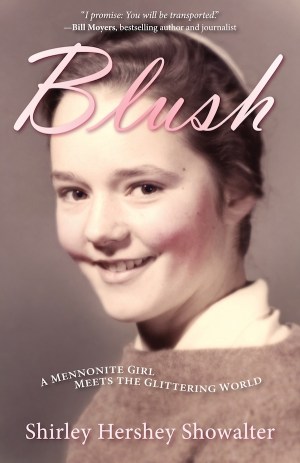
 I’ve just finished reading Blush: A Mennonite Girl Meets the Glittering World by Shirley Hershey Showalter (Herald Press, 2013), and this beautifully written memoir has become my new favourite book. On the surface it might seem there’s little in common between my Asian heritage and her Mennonite childhood, between my city upbringing and her rural life, yet I can well relate to her larger themes of family, faith, home, and growing up.
I’d love to sit down with Shirley to talk about any of these themes, but for this interview, I’m focusing on the writing of Blush. If I ever write a memoir of my own, it will be one of the examples I turn to, and more broadly I’m eager to learn from how she continues to grow as a writer and blogger. Thank you, Shirley, for being on my blog today.
When did you first decide to write a memoir, and what was your process/timeline from idea to publication as a book?
I started small. First I wrote memoir essays. In the 1990’s I contributed to books of personal stories, Godward, She Has Done a Good Thing, and several others. Then I submitted essays to the Kalamazoo Gazette essay contests, 2007-2009, winning awards each year. When I moved to Virginia in 2010, I began thinking about a book. In 2011 I talked with editor Amy Gingerich at the Mennonite-USA Convention in Pittsburgh. By August of that year I had a contract and a plan to write one chapter a month for the next year. I stayed on that schedule and revised the draft many times. By July of this year I was finished with the manuscript. It was published September 19.
I love the way the theme of “blush” starts with the title and is sustained to the end of the book. The contrast between “plain” and “glittering” is also a recurring theme from the subtitle all the way through the book to the epilogue. How did you come to decide on the title and subtitle, and at what point did they become the guide for your narrative?
The themes emerged slowly. The working title for the book was Rosy Cheeks: A Mennonite Childhood. This title came from a high school nickname. I remembered how uncomfortable that name made me. Then I heard someone recommend one-word titles and tried to connect the feeling with one word. Blush was it! The subtitle came a little later and each part of it was debated. Should it be “a” or “the” glittering world.”Meets” or “in.” Etc. When we did the cover reveal, Amy Gingerich explained how we made all these choices.
I worked on the first draft and the title simultaneously. When the cover and title were set (a year ago), I had the opportunity to revise with them in mind. Searching for glitter in the outside world while not yet seeing the gold at my feet became a visual image for the subtitle. Blush gave me a universal theme of feeling embarrassed, bold, and afraid at the same time.
What kind of reflection, interviewing, and other research did you need to do for your book?
I had unorganized photos, some genealogy books and charts, the internet!, and access to many of my elders who are still living. You rightly guessed that this was a big job. A few small errors slipped through. I corrected some of them in the second printing. I hope to correct two more in the third printing.
The book ends with young Shirley leaving home. Can readers look forward to another book that follows Shirley through her college years and beyond? Why or why not?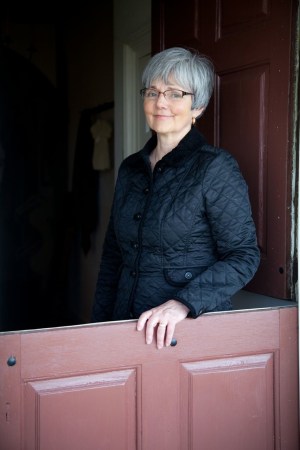
I am answering this question by migrating the theme of my blog and leaving publishing options for the future open. The year 2014 will be the year of multiple book tours for Blush. I’m open to speaking engagements anywhere that will pay my travel expenses. While I do that, I will write one short essay each week on my blog. I am an American Studies scholar, and I would love to look at the 1966-1970 years (my college years) through the lens of my particular and sometimes peculiar location as a Mennonite in the process of dropping outward signs of separation from the world.
You have some stellar supporters for your book from journalist Bill Moyers who wrote a cover blurb to author and educator Parker Palmer who wrote the foreword, and many others. Are these people you know personally, and how did you (or the publisher) approach them? What advice would you give to other writers looking for great endorsements?
I am deeply grateful to both Bill and Parker for their help. I came to know Parker when I was a senior fellow at the Lilly Fellows Program in the Humanities and Arts. And then to know both of them through my work at the Fetzer Institute. While I don’t get to see either of them often these days, I cherish their friendship. They are both the “real deal”—consistent in character in both private and public.
As for advice on finding endorsers? Find other writers you care about and do something to help them. On social media, follow and share and engage when you have something helpful or encouraging to offer. Invite them as speakers to your area. Most people are more accessible today than they have ever been. And even famous people need supporters and helpers. They also want to help others and often will do so if they recognize you, your values, and the quality of your work. That’s the other thing. Don’t embarrass yourself by sending them an unrevised manuscript.
Thank you, Shirley, for this behind-the-scenes look at writing Blush. I wish you all the best as you continue with the book tours and blogging. I’m so glad to connect with you and will continue to follow with interest.
Writing/Reflection Prompt: Are you writing your memoir or planning to? Do you have a question or a tip to share?
_____________________
For more on writing and other acts of faith,
sign up here for free email updates and receive
a copy of How to Pray When Prayer Seems Impossible


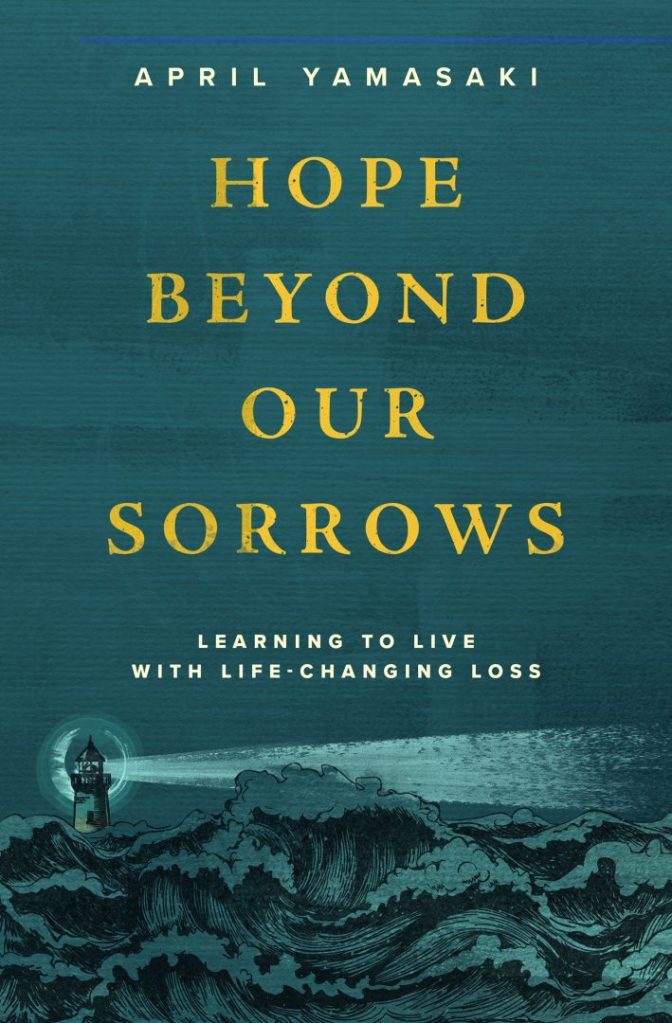
 April Yamasaki
Leave a Reply to krpooler Cancel reply