Have you ever thought of writing as an act of faith?
It takes faith:
- To have an idea and start putting it into words even before you understand all that it means;
- To keep on writing without knowing if any of it will ever make sense to anyone else;
- To spend hours alone at your desk when you could be digging a well or hugging a child or helping a neighbour or making money or doing just about anything else that seems more productive or playful or prayerful;
- To send your words out in the world where they immediately take on a life of their own for better or worse and run the risk of falling flat or simply disappearing in the crowd.
Author E.B. White once wrote, “Writing is an act of faith, not of grammar.” I can easily see the evidence of this in his well-loved children’s books, Stuart Little and Charlotte’s Web, that I read as a child, and in his essays that I later discovered as an adult. Yet curiously, given his statement against grammar, he was also one-half of “Strunk and White” whose classic text The Elements of Style actually begins with rules of grammar: “Form the possessive singular of nouns by adding ‘s,” “Enclose parenthetic expressions between commas.” Clearly White did not ignore grammar–how else would we make sense to one another?–yet writing is more than following the rules. As an act of faith, writing also means imagination and risk, a journey without always knowing the destination or the way.
In The Artist’s Way, author and artist Julia Cameron says this about art which includes the art of writing:
Art is a spiritual transaction.
Artists are visionaries. We routinely practice a form of faith, seeing clearly and moving toward a creative goal that shimmers in the distance–often visible to us, but invisible to those around us. . . . . Art is an act of faith, and we practice practicing it. (page xiii)
But is writing as an act of faith worth it? I ask myself. Maybe for E.B. White and Julia Cameron and other well-known, well-read writers. And yet when I think of my own writing, I sometimes wonder, why bother? Aren’t there already so many other wonderful blogs and books that I should just spend my time reading instead of writing? Is there really any point of adding my small voice to the mix? Someone else can always say it better and likely already has.
It seems that any act of faith, whether writing or anything else, leaves that wiggle room of doubt and second guessing. And yet I know–I know–that every voice is needed, every voice is important–yours and mine and everyone’s. Published and unpublished, private or public, blog or book, writing is an act of faith, and so it matters.
I read something that helped me with this in Leah Kostamo’s Planted: A Story of Creation, Calling, and Community. As she tells the story of the first Christian environmental centre in Canada, she also shares her own story and some of her questions–even as she engages in creation care as an act of faith, she also confesses “that on occasion I question the legitimacy of “earthkeeping” as worthwhile work. . . . is this worth it?” (pages 4-5). Her affirmation applies to my questions about writing as an act of faith too. She writes:
just because I believe that creation care is Christian work does not mean I believe that the task of earthkeeping is the only, or even the most important, work a Christian should be doing. Because I’ve taken ecology’s pattern of interconnectedness seriously I understand that the gospel functions in much the same way. Biblically understood, the church is one body made up of many parts, and it takes all parts to live out a whole gospel. Therefore, I applaud the caring community development worker, the humble evangelist, the erudite theologian, the dogged relief worker, the clever novelist, and the compassionate civil rights activist. All these are potential messengers of God’s love and help bring God’s kingdom to earth. I just don’t think one is better or more important than the others–we need them all (just like we need construction workers, police officers, parents and artists who see their vocations as “spiritual” callings). But let’s not be reductionistic here. While creation care as a vocation is a specific calling, as a a way of life it is everyone’s calling. Just as every Christian is called to witness to God’s love, so too, all Christians are called to steward creation. (page 31)
In the same vein, when I think of writing as an act of faith, I might also say that not everyone has a vocation to write, but all of us perform acts of faith every day–for Christians, it’s our faith in Christ that shapes our vocation, whether writing or earth-keeping or parenting or art or whatever we do, and for anyone–even if you don’t think of yourself as religious, even if faith seems like a foreign country to you–acts of faith are part of being human. We all take leaps that we can’t explain, we all sense the unseen beyond what we see, if not in worship and prayer, then in nature, art, music, the eyes of a lover or a child. We have eternity in our hearts as an ancient preacher once noted (Ecclesiastes 3:11).
And so I continue with “writing and other acts of faith,” and have chosen these words as the new tagline for my blog. I was never totally at ease with “practical spirituality” as a blog title since while I firmly believe that spirituality is for practical, everyday living, I am equally convinced that spirituality must also be lived out in “impractical,” radical, and sacrificial ways. The old title also never fully accounted for my posts on creativity and writing, yet those have proven to be among the most popular posts on my blog. In fact, three out of my five all-time top posts are writing-related. So “writing and other acts of faith” makes a better title–big enough to cover all my posts so far with plenty of room to grow.
_____________________
For more on writing and other acts of faith,


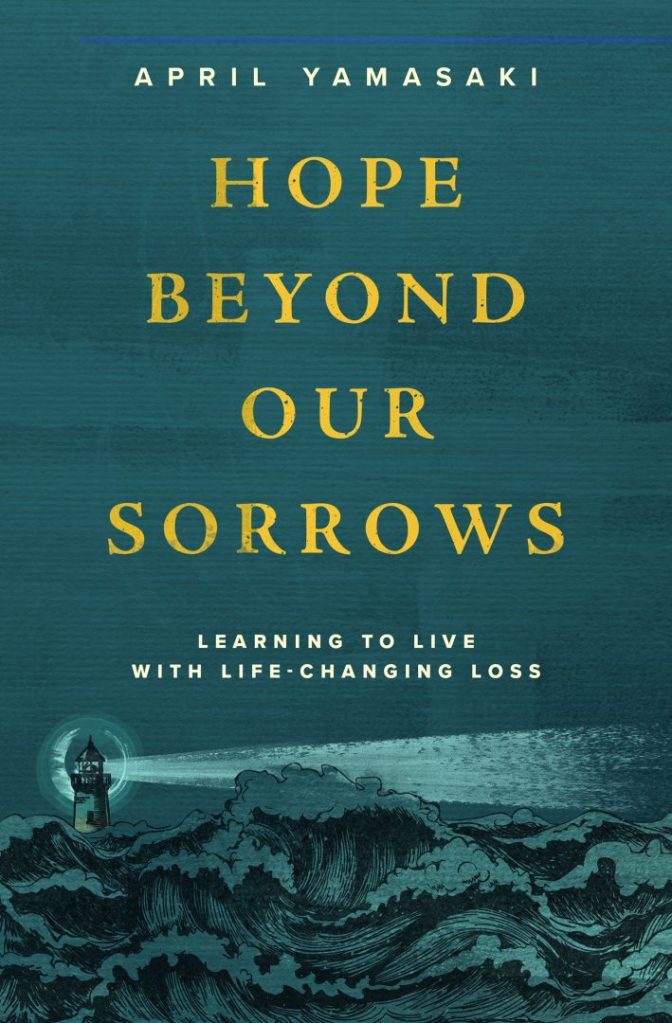
 April Yamasaki
Leave a Reply to shatteredpieces2014 Cancel reply